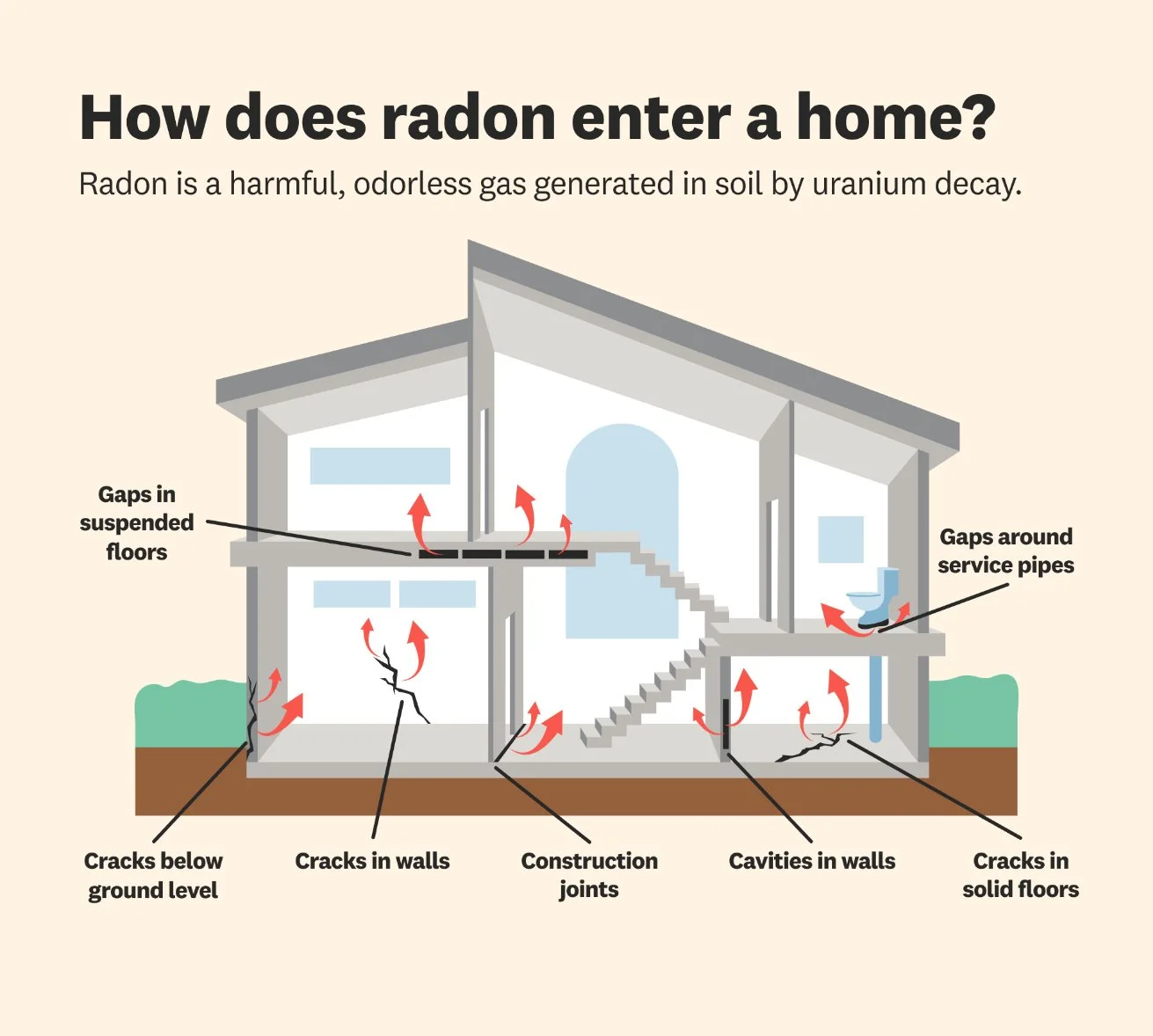
What is Radon?
Radon is a naturally occurring, radioactive gas released as uranium in soil breaks down. It can enter homes, schools, and workplaces through foundation cracks and other openings, building up indoors over time. Long-term exposure to elevated radon levels is a serious health risk and is a leading cause of lung cancer.
The EPA recommends installing a radon mitigation system when levels measure 4.0 pCi/L or higher.
Why Radon Matters
Radon causes over 20,000 deaths each year
It’s the #1 cause of lung cancer in non-smokers
1 in 15 homes has elevated radon levels
In some areas, up to 2 in 5 homes test high
How Do I Know If I Have Radon?
Radon is invisible and odorless—testing is the only way to detect it. A home or business may have dangerous levels without any warning signs.
Test kits are widely available online or at local hardware stores, and some states offer free kits. Visit our Locations page to find radon testing resources in your area.
How Are Radon Levels Reduced?
If testing shows radon levels above 4.0 pCi/L, a mitigation system is highly recommended. These systems use a specialized fan and piping to safely vent radon gas from the structure to the outside air, where it naturally disperses.
We evaluate your test results and building structure to recommend the most effective solution for your home or business.